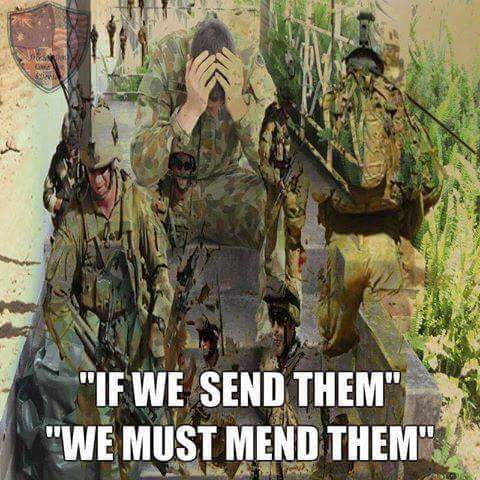
Friday, 17 June 2016

VIETNAM A father's war, a son's toxic inheritance By Stephen M. Katz as told to Mike Hixenbaugh, The Virginian-Pilot and Charles Ornstein, ProPublica

A few months after Stephen's latest heart surgery, A yellow envelope contained a two-inch stack of documents: handwritten notes, old photographs, newspaper clippings, medical files and military service records of a father he hardly knew. A man he hadn't seen in over 20yrs but was an American Vietnam Vet-one of many who was responsible for the actual spraying of the chemical 'Agent orange' on the jungles of Vietnam.
At first,  Stephen didn’t open the envelope, I mean, why would he want to rip open that old wound? He tossed the envelope onto a shelf in a closet, and there it sat for years, forgotten behind a pile of clothes but what Stephen didn't know  was that it held information that would link his life – and health – to a war waged before our birth. It wasn’t until 2 becoming a father in 2012 that he pulled that envelope out, figuring someday he would want to tell his son where he came from... Only to find so many pieces to his life puzzle staring back at him.
Stephen had been to Vietnam prior to opening his fathers package and seen 1st hand the effects of the Vietnam war and Agent Orange over the country and it's people. He met with veterans and children of veterans, volunteered in orphanages  and knows the locals are still suffering long after the rifles have been put down and their air strikes long stopped. The troupes are back home now for 40 years or more but the effects are still immediate in time. Being a photographer, Stephen caught some surreal images on his journey. (Some are available in this link.. but i'll include 2 below just to give you a taste.)


The story in the below link by Charles Ornstein shows a really holistic view of  the post war effects with the help of Stephen Katz .
Take a moment to read and be prepared to see things from a new perspective!

CLICK HERE TO VIEW --> A sons toxic inheritance


Monday, 13 June 2016

WHO ARE YOU CALLING NARCISSISTIC? What is Narcissism? What are the signs:-D


OwlNarcissistic Personality Disorder – being excessively preoccupied with themselves. Owl believes that he is the most clever animal in the wood, boasting how he has brains whilst “the others have fluff”

SO, WHAT IS NARCISSISM?

Ok, so recently I received an email asking me to cover narcissism or narcissistic personalities after discussing bipolar type II and the impact of schema. REMEMBERING - I am not a psychiatrist or psychologist!  All I can do is shed my personal understanding.  I'm happy for readers to correct me (respectfully) if I am mistaken in the comments under this post.
So......
  From my limited studies last year and having a narcissistic cousin, I understand that narcissists are angered by anything that seems to suggest that like any other human, they too have flaws! They will do just about anything, including brutalizing their own family to maintain that facade of perfection.
Narcissists have extreme and illogical sensitivities, sometimes connecting the most minute observations with their intense fears of being perceived as flawed. Narcissists will strain every muscle to meet their own "flawless" image, and demean or destroy anyone or anything who casts any doubt over that image.  Nearly everyone knows a narcissist and you probably don't need to think to hard to spot that person in your circle.
 People with the disorder suffer with issues of power, recognition and vanity and their lack of empathy toward others can be extremely destructive to relationships. However, under their inflated self-confidence and preoccupation with self-image lies a fragile self-esteem and a feeling of inadequacy.
I haven't read any material that indicates the cause of Narcissistic Personality Disorder, however, just like most personality disorders, it is probably a mix of childhood experiences and genetic vulnerabilities but there seems to be a suggestion that disorder may develop as a coping mechanism for a damaged self-esteem and sense of self-worth.
Narcissistic rage is common and usually the first sign to those around the narcissist that there is a problem. It can be provoked by the slightest—real or imagined—narcissistic insult, such as not being seen, understood, or appreciated, in the way one feels he deserves. Narcissistic envy may also arise; one hates anyone who has (or seems to have), a rich inner life or external acclaim and feels pain about not having what the other has.
Narcissistic range has several characteristics that differentiate it from other kinds of anger and rage such as:
*It feels and appears irrational, for it is greatly out of proportion to the situation that provoked it. ( This gives the rage the quality of being uncontrollable)

*This rage tends also to be acted out because of or in addition to righteousness and indignation, there is a sense of entitlement

*The irrationality and uncontrolled quality of this rage make's the person closed off to others’ responses or reasoning

* There is a blaming and defensive characteristic of  the narcissistic rage which gives it an isolating quality.  (This schizoid quality is reflected in the actual energetic state of narcissistic rage.)

* A narcissist feels, and is perceived by others as, hard and impenetrable, almost inhuman . There is a meanness in this reaction, a desire to inflict pain, to get back, to avenge oneself.

Narcissistic rage is also characterized by a tendency to devalue the self-object with an intense need to demean and insult . They are motivated to dissolve their wounds by causing a similar wound to the person or perceived people who caused theirs.
The key  to interacting with someone you suspect is narcissistic is to break the vicious circle—to gently thwart their frantic efforts to control, distance, defend or blame in the relationship by sending the message that you’re more than willing to connect with them, but not on these terms; to invite them into a version of intimacy where they can be loved and admired, warts and all—if they only allow the experience to happen.

In Chinese the ideogram for "crisis" and "opportunity" is one and the same. Helping your narcissist transform their curse into a blessing in other people's lives could indeed benefit the narcissist's self growth and understanding  PLUS help others on their way. Encourage them to tell their story, to teach others how to avoid the same pitfalls, how to cope with the damage in a but in a more institutionalized manner.  encourage them to assist other narcissists  personal growth. As they explore and identify their own strengths and weaknesses, you will find it changes the dynamics of external relationships with people such as yourself. In saying this, I feel the best advise of all is to encourage the loved ones of narcissists to seek help for themselves so they can identify whether it is safe to stay in the relationship, get individualized guidance on how to deal with and help your particular narcissist as well as explore skills to potentially encourage the narcissist to seek professional help for them selves.

(I hope this has helped a little.)

 Reach out is a great NGO with information and resources you may wish to tap into if you or someone you know and love suffers a personality disorder or mental health issues. I have referred many friends to this site over the years as well as clients when in youth work.
http://au.reachout.com/help-services-for-personality-disorders

 5 more character's we grew up to love that suffer Narcissism 


SLike Pepe, someone can exhibit NPD in multiple ways, as there is more than one way to make the world revolve around yourself.  Pepe’s NPD stems from his belief in ideal love, and that he is the ideal lover.  Pepe’s behavior towards his unfortunate amour, Penelope, shows a lack of empathy, as well as an inability to believe that she really does not want to be with him, that comes from his perceived entitlement to her.  He shows arrogant behavior (claiming that he is too attractive) and requires an unrealistic amount of affection (from a stranger!) in order to be happy.

  Queen Grimhilde from Snow white is a textbook narcissist: she’s vain, selfish, and has an inflated sense of self-importance. Someone needs to teach this lady how to age gracefully.

Jafar, the recognizable baddie from Aladdin is a possible example of a either a sociopath OR narcissist! He is extremely cruel, displaying zero empathy when he sacrifices a young boy for the realization of his goals. Jafar is antisocial, with no apparent moral responsibility or sense of conscience. He is charming and manipulative, and ruthless in his attempts to rule the Universe.


 Scar's deep-seated narcissism has him  fiercely devoted to his own thirst for power. He might be aware of the destructive force of his power struggles on those around him but it doesn’t matter to him. As for his tyrannical leadership of the hyena population; Scar is arrogant and demanding and he expects everyone to follow his every whim, something that becomes apparent when he replaces his dead brother as king of the pride.
   Gilroy Lockhart from the Harry Potter series This is the definition of narcissism. Lockhart is hilarious. One of the comical moments from the series is when Lockhart is talking to Harry during his detention and says “Fame is a fickle friend, Harry. Celebrity is as celebrity does. Remember that.” *turn and smile* He goes to such lengths as to fake his fame and risk the deaths of many students just to keep his ego fed.


Saturday, 11 June 2016

What is Jean Pirget's Schema theory and how does it effect how we receive information?


WHAT IS JEAN PIRGET'S SCHEMA THEORY ? AND HOW DOES IT EFFECT HOW WE RECEIVE MESSAGES? 
This is a 2min demonstration and explains a whole lot about how we receive messages can be distorted by our prior knowledge. While discussing my personal schema with my psychologist, I found this theory really interesting and it explained why I react the way I do in certain circumstances. 


Click on the link and see if this simple explanation                                                                                                                 helps you too!

Saturday, 4 June 2016

And the war goes on... the forgotten casualties of the Vietnam war.


By Rose Taylor


Stumbling on air out of fear- swiftly grabbing something..SHHH..ensure to not make a noise.  Tip toeing,  walking on egg shells... but if you cut yourself be sure not to cry.
Be polite,  don't  back chat,  just say 'yes Dad' and 'Sorry'...  I don't  want to set him off.
Be tough,  harden up,  conceal,  for gods sake don't show that you  feel or you will be called weak and told to toughen up.
Coming home from school.... what will I walk into?  Will dad have spent all day harboring anger about something and waiting for me to  accidentally push the imaginary big red button that will set him off and release all his anger aimed at the world right at me- or will he be happy and baking cakes? (Literally)
Welcome to the world of most children of Vietnam veterans.
For me,  I never knew the innocent  pre-war 18yr old that my grandparents spent a long time describing to me as my dad. Apparently,  he didn't  take life very seriously when young,  he was adventurous... and hitch hiked his way around most of Australia to see the sights and learn more than school could teach him in geography or history before his 18th birthday. He used to chase the girlies with much success giving my grandmother heart attacks that she was going to become a  too young. Nona. 
She would explain to me how she was only 16 when she had dad,  so she felt she had grown up along side him &  were best friends more than mother and son before he went to nam... she knew him well... 'better than most parents know their kids'  she would say,  and her reasoning for this was that it is because she was a kid having a kid when he was born, so she spoke to dad like he was her mate and he spoke with the same honestly.... and exaggeration most young men speak with to their mates - so when dad made her a grandmother just before her 35th birthday with my eldest sister (whom I have never met-Charmaine Maree, ) she truthfully wasn't  surprised.. because her son,  whom is now MY dad was an absolute charmer before the Army handed him a 7.62 mm L1A1 Self-Loading Rifle and taught him jungle warfare.
So with this I guess  you can say I was born into a war that had long left the jungle... but was still pumping fearlessly through  my fathers veins which prevented him from being the man my nan 'grew up with'  or the father he had the potential to be... for either  his eldest child... or me!
I have always considered  my self 'the lucky one.'  From what I can tell,  dad had 2 other children prior to me - his eldest daughter whom he was a teen father too and a self confessed dead beat dad towards, and a son named Tahn born to a Vietnamese singer named Wah at a pub he went to when on leave in Saigon but he never stepped up to 'father.' Dad would call me his one and only while being extremely honest about his past as a 'sperm donor.' (Term he coined for himself to describe his lack of contribution to my siblings life)
But the flip side to this is maybe Charmaine and Tahn were the lucky ones growing up?  I mean,  they didn't  have a dad this is true,  but with any luck they had great mums (where as I has a 'egg donor')  and weren't exposed to the demons of the nam war that created my PTSD suffering,  unpredictable father who raised me fearing him. I knew he loved me but boy was there a lot to fear from my 1st breath.
Apart from the trauma of my egg donor,  my childhood memories of dad include him being the savior as he protected me from the 'egg donor'  but on the flip side,  I spent my entire  childhood scared as hell of what dad would do next.
The amount of nights that he ingested more than a case of beer as he self medicated to forget his demons are uncountable,  the amount of trees he punched for no known reason,  bus stop shelters he demolished in a rage also for no reason,  gardens  he dug violently just to release his anger and so on,  and so on are more than I can count.
The amount  of times I was scared  for my life as a passenger in his car  because he was driving with a case or close too it of beer in his system meaning he made risky decisions on the road putting not just us,  but others on the road in danger.
He hardly ever smacked me,  but when he did it sent me flying as he didn't know his strength. He would leave huge  marks so thankfully he stopped resorting to smacking but if I was in trouble,  he was terrifying and there was no 'norm'  or standard as the rules and  markers of expectation changed daily and based on his mood.
I was later abused by him in other ways.. all driven my PTSD and alcoholism... but I couldn't  let go.
He had pushed away all our family and I knew I was all he had... and frankly,  he was all I had.
He had my back and I had his no matter  the abuse stuff.. I was his 'little one' and he was my wild.
This came at a cost though,  I've  suffered anxiety since young,  separation anxiety,  a terrible seance of self identity  and worthlessness as I always felt like I was the slaughter  lamb,  sacrificed to try and balance his mood as needed... and later,  i put my self in the position of 'the sacrifice'  as in, I would take the fall for  others in my life to try and win acceptance and approval. To make others smile or feel loved and  accepted... but I've never really known how to care for me!
I have secondary  PTSD,  I am jumpy,  I  have nightmares,  my body clock is all over the shop, I'm  defensive and ALWAYS ready to go into battle.
I guess it would be fair to say that the war raged through my fathers veins and was passed fresh onto me. I was born into a battlefield with no arms or weapons,  no battalion along side  me and no re-enforcement's that can be sent in to get me out!  Dad left Vietnam,  but he never left the war,  he became the war!

The Australian  government promised and still promises our serviceman that they will be looked after for life as a thanks for serving our country, yet the RSL  and general public absolutely refused to accept or help our nam boys or their families for decades!
My nan lost her son to Vietnam,  his body lived but the person she raised died over there and was never seen again.
My 2 uncles and 1 aunt lost their  brother... they couldn't have a relationship with him because the abuse, the outbursts, the fights were unbearable which cost me a relationship with them.
My sister and my brother never knew their dad...and don't know  about each other,  or that they have a little sister.
My cousins never got to truly know my dad or I because 'it had to be this way.'
My father suffered nightmares,  rage,  anger,  depression,  isolation  and poor health with no access to the mental health help he needed for years.. it only just came in time for dad to be ready for grandparenthood... far to late to help him to be a good parent.
He lived below the poverty line because he worked in mediocre  jobs,  unskilled vocations  after the army as they didn't  release him back in to civilian life with any trade or training that would help him establish a career post infantry service. They didn't  'deprogram'  him,  so he was a soldier without a war,  leaving it raging inside him for life and passing his war legacy onto me.
He couldn't  afford a good education for me,  medical or dental...
Frankly,  the army killed my dad and bought back a bag of skin and set it free on society... and they killed me before I was even born. I didn't have a fighting chance in  hell. This isn't  a poor me story,  this is the reality for thousands of Vietnam vets  and their  families.
There is a generation of broken men with broken children because our government conscripted and  promised  our nam vets the world but delivered nothing.
Because society shunned our dads and called them baby killers,  murders and rapests while throwing  rotten foods and bodily fluids at them upon their returned, this too creating further scars on already scared tissue.
And now our dads are dying,  those that didn't commit suicide  upon return,  are being diagnosed with small cell carcinoma   (an aggressive cancer)  caused by the US government spraying a toxin called 'agent orange' on their physical beings and in their  water supplies for drinking and bathing. More help is now available now than ever  for our men from the DVA to access some of the countries best care for these  illnesses caused by their service inc PSTD but I wonder if it's a all too little too late.
I'm  eternally grateful for the palliative care the DVA arranged for my dad inc the top oncologists and an amazing palliative  hospital... I'm  grateful for all the psychiatrist appts they paid for over the last 15yrs and hospital admissions for mental health into private facilities... but if we treated our ex-serviceman right upon return, I wonder of it would actually save a hell of a lot of long term tax payers dollars over the long run?? 
 If dad got vocational training and a career,  would his overall health have been better?  If they didn't  have to learn they were being lied too by the government of the day  and knew what the hell they were actually fighting for  at the time, would it have made a difference to the long term mental health impairment our dads suffered?
If we acknowledged out veterans when they returned as opposed to waiting 30 years would it have changed things?
Could altering how our fathers were treated and lacking support from discharge have given kids of veterans like me a more stable,  normal up bringing  With less mental health issues?
And why have our government never taken the US to task for spraying the jungle and water supplies with agent orange??  Why have we taken it up the butt from America on this? 
Our men... placed their lives on the line and if it wasn't  the viet-kong who killed them almost instantaneously with a bullet,  it was the god awful American government killing them slowly and painfully like in a torture chamber with the effects of agent orange but no-one is made responsible for all the lives effected by this monumental screw up that has effected upto 3 generations over 40yrs with health issues,  birth defects,  cancers and more. The Australian government  have been held accountable and made to pay out thousands.... but why aren't  we forcing the hand of America to pay for this... after all,  it wasn't us spraying that crap!
And I am scared for mine and my children's generations... the war is still going!!!  Not in a jungle or within battalion's but in our bodies and families and there is next to no support for us.
My mental health is a prime example. It's 100%  caused by the parenting I received by my war vet father. The abuse,  lack of opportunity and poverty effected my life,  my health and my over all well-being. I was born with a mild birth defect as well that my dad had to work 2 jobs to pay off for me to have which  saved my life as a child.
I have ongoing mental health expenses that no-one says ' we are so sorry our negligence caused this... please accept our assistance in covering your expenses as you are suffering this for the rest of your life due to our miss management.'
Counselling is nice, appreciated and I thank our government  and VVCS for it,  but the bill for the psychiatrist's and the meds that I NEED for the rest of my life are not at all remotely covered or discounted. If I need hospitalization due to my mental heath,  I have access  to no assistance to get the care I need. I currently can't  work because of my mental health so I can't  afford private  health cover, the barbaric  act of spraying agent orange killed my dad so I have no family assistance to cover this, I am not eligible for a loan which only leaves me access the the mediocre at best government hospital mental health assistance which lock you up like a criminal and treat you as if your an animal in a cage.. and lets be really honest people,  this WOULD have adverse effects on the mental health of the healthy,  never loan someone asking for help with the knowledge of a real problem!
My inability to work ATM  due to my mental health is DIRECTLY caused by dad and his service yet I am locked out of the private system that COULD help me due to my inability to work AND a government who couldn't  care less about how their decisions have effected multi generational health issues!
What will it be like for my children?  If I can't access assistance,  surely my kids have no hope.
A few scholarships a year for vocational training for grandchildren of vets won't  help them with learning difficulties in their early years,  Asperger and other diagnosis  proven to be linked  to the service of grandparents. we have wasted billions of Australian tax payer money  on last minute  crisis support of our veterans instead of millions on supporting them and their families in the first place... which would have saved the government  from their current 'economic crisis.'
The government will pay me a new start or parenting pension , then a disability  pension if I fight hard enough for it, but for what? To sit on my fat butt for the rest of my life?  But wont HELP me get the right treatment  to get my mental health under control and back to work so instead of costing  the tax payer over the span of my life,  I can get back to working and living a balanced life paying them taxes!
They would make far more money this way! If a child of a Vietnam veteran had a plan to be a contributing member  of society and doing all the right things to achieve this for them selves,  isn't it an investment  to help them get there?
I'm so very lost at the mind set of our government!  And last but not least,  if they held America responsible for the agent orange,  and made them pay for all the effects its had om Australians, it would cost our government far less and may teach America about consequences to their actions. Look at them now!  They aren't  spraying agent orange now but are doing just as deadly and ridiculous things in the current  wars with no regard for the consequences of their actions on yet another generation  of their own and Australian soldiers and their families.
It's  about time we stopped the ridiculous  bi-generational effects of war and armed services... supported our troops and  families and fix  this for the generations to come!
RANT OVER!

click on the follow button  below so you never miss a crazy (but honest) rant from this mental mumma in heels!


TO YOU HE MAY JUST BE ANOTHER SOLDIER... A DIGGER WHO GREW OLD... BUT THAT'S MY DAD!
HE SUFFERED THE ULTIMATE SACRIFICE FOR OUR COUNTRY... HE BATTLED DEMON'S IN HIS HEAD AFTER LOSING HIS SOUL IN NAM.
MY DAD LOST HIS LIFE ON HIS 69TH BIRTHDAY, A GOOD 40 YEARS AFTER LOOSING HIS SOUL IN A FIGHT THAT HAD NOTHING TO DO WITH US! THAT GOD DAM WAR STOLE OUR FATHERS, BROTHERS, SON'S, UNCLES AND NEPHEWS ALONG WITH OUR CHANCE OF A QUALITY LIFE...
IT HAS RUINED A COUNTRY AND 3 GENERATIONS ACROSS NUMERIOUS CONTINENTS.... HOW LONG WILL WE STAND IN SILENCE ON THIS?


Tuesday, 31 May 2016

When a Child's Parent has PTSD Jennifer L. Price, PhD

When a Child's Parent has PTSD
Jennifer L. Price, PhD
Introduction

Researchers have examined the impact of Veterans' PTSD symptoms on family relationships, and on children of Veterans in particular. Understanding how these symptoms affect relationships can help families and children of Veterans cope with difficulties, should they arise. Although much of the research described here has been conducted with children of Vietnam Veterans, findings from this body of research may generalize to children of Veterans from other eras as well as non-Veterans with PTSD.
How might a Veteran's PTSD symptoms affect his or her children?

Re-experiencing symptoms

Individuals who have PTSD often "re-experience"' traumatic events through vivid daytime memories or dreams. Re-experiencing can occur suddenly and without intention, and it is typically accompanied by intense emotions, such as grief, guilt, fear, or anger. Sometimes these intrusions can be so strong or vivid that the individual believes the trauma is reoccurring.
These symptoms can be frightening not only for the individual experiencing them but also for children who witness them. Children may not understand what is happening or why, and they may start to worry about their parent's well-being. Children may also worry that their parent cannot properly care for them.
Avoidance and numbing symptoms

Because the re-experiencing symptoms characteristic of PTSD are so uncomfortable, people who have been traumatized tend to try to avoid thinking about the traumatic event. They may also attempt to avoid places and experiences that could trigger upsetting memories. As a result, individuals with PTSD may not want to do things or go places, such as to the store, to the movies, or out to dinner. Children may feel that their parent does not care about them when the reality is that the parent is avoiding places that are just too frightening. In addition to these active avoidance strategies, traumatized individuals often struggle with experiencing positive emotions and may feel "cut off" from other people, including family members.
These avoidance and numbing symptoms can have a direct impact on children. For example, when a parent with PTSD withdraws from family members and has trouble feeling positive emotions, children can inaccurately interpret this as the parent not being interested in them or loving them, even though the parent may try to indicate otherwise.
Hyperarousal symptoms

Individuals with PTSD tend to have a high level of anxiety and arousal, which shows up as difficulty sleeping, impaired concentration, and being easily startled. They tend to have a high level of irritability and may experience an exaggerated concern for their own safety and the safety of their loved ones. Parents with PTSD can therefore tend to be overprotective. Irritability and low frustration tolerance can make a parent seem hostile or distant, again making children question the parent's love for them. This perception is simply a misunderstanding of the reasons behind the symptoms.
How do children respond?

A parent's PTSD symptoms can be directly linked to their child's responses. Children can respond in certain ways:
The "over-identified" child might feel and behave just like their parent as a way of trying to connect with the parent. Such a child might show many of the same symptoms as the parent with PTSD.
The "rescuer" child takes on the adult role to fill in for the parent with PTSD. The child acts too grown-up for his or her age.
The "emotionally uninvolved" child gets little emotional help. This results in problems at school, depression, anxiety (worry, fear), and relationship problems later in life.
What are some problems children of Veterans with PTSD might experience?

Social and behavioral problems

Research in Vietnam Veteran's families has revealed that children of Veterans with PTSD are at higher risk for behavioral, academic, and interpersonal problems. Their parents tend to view them as more depressed, anxious, aggressive, hyperactive, and delinquent compared to children of non-combat Vietnam era Veterans who do not have PTSD. In addition, the children are perceived as having difficulty establishing and maintaining friendships. Chaotic family experiences can make it difficult to establish positive attachments to parents, which can make it difficult for children to create healthy relationships outside the family. There is also research showing that children may have particular behavioral disturbances if their parent Veteran participated in abusive violence (i.e., atrocities) during combat service (5).
Some research has found that PTSD is related to an increased likelihood of violence in the home. It is important to note, however, that the majority of Veterans have violence-free homes and that most of this research is correlational. For example, one study found more violence in families of Vietnam Veterans with PTSD than in families of Veterans without PTSD, including increased violent behavior of the child (1). Several studies have examined the relationship between fathers' combat-related PTSD and violent behaviors and their children's functioning (2, 3, 4).
Emotional problems and secondary traumatization

Although not common, children may start to experience the parent's PTSD symptoms (e.g., start having nightmares about the parent's trauma) or have PTSD symptoms related to witnessing their parent's symptoms (e.g., having difficulty concentrating at school because they're thinking about the parent's difficulties). Some researchers describe the impact that a parent's PTSD symptoms have on a child as secondary traumatization (2). It is also possible that children develop PTSD symptoms of their own, especially if there is trauma or violence in the home. Research on Vietnam era Veterans found that children of Veterans with PTSD are at higher risk for being depressed and anxious than non-combat Veterans' children. Having a supportive parent or caregiver can offset these problems and enhance recovery in children with PTSD or other emotional concerns.
Problems may continue into adolescence

Adolescent children of Veterans with PTSD may be similarly affected by their parent's symptoms. Although the research cannot point to cause and effect, compared to adolescents whose fathers were not Veterans, adolescents whose fathers served in combat in Vietnam showed poorer attitudes toward school, more negative attitudes toward their fathers, lower scores on creativity and higher levels of depression and anxiety (6). In spite of these differences, the two groups of adolescents were actually quite similar on a range of other measures of social and personality adjustment.
Can children get PTSD from a parent?

Although not common, it is possible for children to display symptoms of PTSD because they are upset by their parent's symptoms (secondary traumatization). Some researchers have investigated the notion that trauma and the symptoms associated with it can be passed from one generation to the next. Researchers describe this phenomenon as intergenerational transmission of trauma. Much research has been conducted with victims of the Holocaust and their families (see Kellerman [7] for review), and some studies have expanded on these ideas to include families of combat Veterans with PTSD.
Ancharoff, Munroe, and Fisher (8) described several ways to understand the mechanisms of intergenerational transmission of trauma. These mechanisms are silence, overdisclosure, identification, and reenactment.
When a family silences a child, or teaches him/her to avoid discussions of events, situations, thoughts, or emotions, the child's anxiety tends to increase. He or she may start to worry about provoking the parent's symptoms. Without understanding the reasons for their parent's symptoms, children may create their own ideas about what the parent experienced, which can be even more horrifying than what actually occurred.
Overdisclosure can be just as problematic. When children are exposed to graphic details about their parent's traumatic experiences, they can start to experience their own set of PTSD symptoms in response to the images generated.
Similarly, children who live with a traumatized parent may start to identify with the parent such that they begin to share in his or her symptoms as a way to connect with the parent.
Children may also be pulled to reenact some aspect of the traumatic experience because the traumatized parent has difficulty separating past experiences from present.
What should a parent do?

Parents can help children by understanding how specific symptoms of PTSD affect relationships and by using the resources identified below. Preventive interventions can be helpful and include explaining to family members the possible impact of intergenerational transmission of trauma before it happens. Education about the potential impact on children can also be a useful response when a child is already being affected by his or her parent's trauma history.
An excellent first step in helping children cope with a parent's PTSD is to explain the reasons for the traumatized parent's difficulties, without burdening the child with graphic details. It is important to help children see that the symptoms are not related to them; children need to know they are not to blame. How much a parent says should be influenced by the child's age and maturity level. Some parents may prefer to have help with what they say to their children, and assistance through therapy or written materials can be helpful.
In addition to this basic first step, there are multiple treatment options available for affected families. Treatment can include individual treatment for the Veteran, as symptom improvement for the person suffering from PTSD would also benefit the family. Family therapy can support the parent who is struggling with symptoms and teach family members how to get their own needs met. Family therapy is typically more effective if the Veteran with PTSD has first received some type of trauma therapy so that he or she is better able to focus on helping the children during family sessions (9).
Children may benefit from individual therapy as well, with variations based on the child's age (e.g., play therapy for younger children, talk therapy for older children and adolescents). Each family is unique, and decisions about what kind of treatment to seek, if treatment is needed, can be complicated. The most important thing is to help each member of the family, including the children, have a voice in expressing what he or she needs.
VA has taken note of the research showing the challenges that families can face when dealing with PTSD, as well as the importance of family in supporting the Veteran's recovery from PTSD. The Caregivers Act was enacted in 2010 and mandated VA to document the effects on family members and assess caregiver needs and resources. VA PTSD programs and Vet Centers across the country are beginning to offer group, couples, and individual programs for families of Veterans.
References

Jordan, B. K., Marmar, C. B., Fairbank, J. A., Schlenger, W. E., Kulka, R. A., Hough, R. L., et al. (1992). Problems in families of male Vietnam veterans with posttraumatic stress disorder. Journal of Consulting and Clinical Psychology, 60, 916-926.
Cosgrove, L., Brady, M. E., & Peck, P. (1995). PTSD and the family: Secondary traumatization. In D. K. Rhoades, M. R. Leaveck, & J. C. Hudson (Eds.), The legacy of Vietnam veterans and their families: Survivors of war: catalysts for change (pp. 38-49). Washington: Agent Orange Class Assistance Program.
Harkness, L. (1993). Transgenerational transmission of war-related trauma. In J. P. Wilson & B. Raphael (Eds.), International handbook of traumatic stress syndromes (pp. 635-643). New York: Plenum Press.
Parsons, J., Kehle, T. J., & Owen, S. V. (1990). Incidence of behavior problems among children of Vietnam War veterans. School Psychology International, 11, 253-259.
Rosenheck, R., & Fontana, A. (1998). Transgenerational effects of abusive violence on the children of Vietnam combat veterans. Journal of Traumatic Stress, 11, 731-742.
Dansby, V. S., & Marinelli, R. P. (1999). Adolescent children of Vietnam combat veteran fathers: A population at risk. Journal of Adolescence, 22, 329-340.
Kellerman, N. (2001). Psychopathology in children of Holocaust survivors: A review of the research literature. Israel Journal of Psychiatry and Related Sciences, 38, 36-46.
Ancharoff, M. R., Munroe, J. F., & Fisher, L. M. (1998). The legacy of combat trauma: Clinical implications of intergenerational transmission. In Y. Danieli (Ed.), International handbook of multigenerational legacies of trauma (pp. 257-275). New York: Plenum Press.
Harkness, L. (1991). The effect of combat-related PTSD on children. National Center for PTSD Clinical Quarterly, 2(1).

BECAUSE MENTAL ILLNESS BREADS SOME OF THE WORLDS GREATEST TALENT! : Meet Jess, a talented photographer from Vic/Australia

HEY....My name is Jess and I run my own photography business and have done so for about 3 years now. I specialize in weddings and I'm lucky enough to love what I do. I also have Bipolar type one. I could go on about my business and amazing prices but instead I would rather tell you about me. hehe :-)  I'm a mother of two pretty rad humans, a wife to the most wonderful man I know who just happens to be my best friend, photographer, procrastinator and occasional doer.Lover of white wine, abstract art, sunsets, songs that make you cry and TV shows that make you want to stalk the characters Instagram pages when their over because you feel like you know them and just want to see what they're up too! I've made lots of mistakes, some questionable casseroles and some amazing memories. I admire woman with confidence, woman who give birth to ten pound babies and a quick wit. I have little to no understanding of boundaries and I break rules daily.. Usually it's unintentional, I swear.. My hobbies include sleeping to much and then complaining when it's 3am and I can't sleep, long "romantic" walks on the beach (which I usually take alone), playing with my 2 overly dependent dogs, reading memoirs and stories of overcoming trauma and pretending I know what I am doing in a kitchen. I drink to much coffee, I sniff new born babies and even though I am 28 years old, I am yet to invest in a hairbrush. Some people think I am funny, however Bipola has this ability to remove the filter most people have so when I speak its bluntly honest and thankfully people seem to enjoy the humour this brings, I guess I'm lucky like that. I once ate a whole apple, including the core because I couldn't be bothered going to the bin, admit it, you’ve done it. And one day I hope to love something as much as woman in commercials seem to love yogurt. :-)If I'm someone you would like to help capture your special moments then let me know! I would be honored! For all your photography needs 💙


SERVICING :Mornington, Victoria,  and surroundings 


CONTACT ME VIA FACEBOOK  VIA THE LINK:  

https://m.facebook.com/JKMphotography01/


Sunday, 29 May 2016

young adults raised in institutions are 10 times more likely to fall into sex work than their peers, 40 times more likely to have a criminal record and 500 times more likely to take their own lives!!!


This is a truly fasinating story about the 'business'  of orphanages over sea's,  but as i read the article,  I found some statistics and information that surely apply to our children with care orders until the age of 18 here in Australia.
Residential Care,  out of home care or youth refuges as it is know here also don't provide for the basic primitive need for an attachment to one primary adult.
Tara in this story learned that when children don’t get what they are biologically programmed for, it can have a significant impact on the development of human brain architecture – key synapses, the connections between the nerves, fail to form in really critical regions of the brain.
“The constant rotation of caregivers in an institution – even an institution with the best possible standards of care – leads children to adopt survival techniques to gain the attention and affection of adults. After the workshops with the psychologist, I was able to start recognising some of the behaviour problems we were seeing in the kids, like indiscriminate affection, as symptoms of attachment disorders.
As Tara dug a little deeper,  she uncovered some truly unsettling facts. “There’s a huge body of international scientific research proving that children can’t thrive when growing up in residential care. One study found that young adults raised in institutions are 10 times more likely to fall into sex work than their peers, 40 times more likely to have a criminal record and 500 times more likely to take their own lives.” Sound familiar?  As a kid in care,  i escaped with only spending the equivalent of 2yrs in a refuge. (Broken across time) and as an adult,  I spent a good 3yrs working in res care. The rate of crime of those young people,  drug use and suicide i encountered was mind blowing... and I my self have had numerious suicide attempts.
According to Tara, The solution in these 3rd wolrd countries is to redirect our support and donations away from organisations with residential care and  towards organisations that promote family-based care,” says Tara. “If all the funding being sent to orphanages and other residential care institutions was redirected to organisations are getting children out of institutions and back to families, as well as preventing vulnerable families from being separated in the first place – we could then see an end to the era of institutional care of children.”
Does this also not sound familiar? 
Funding and training to recruit more LONG TERM foster placements with a view of adoption right here in Australia could change a system that currently leaves kids in care  far behind the 8 ball in oyr society!
Now that i've had my rant,  please do take the time to read Tara's powerful message about how we can truly help empoverished 3rd world countries.'Teddys and books sent in care packages isn't  the answer.. support an agancy that works on the foster care principle as opposed to orphanages and institutions that inhibit a childs development and retards their future!
The link is:
http://www.kidspot.com.au/parenting/real-life/in-the-news/stop-supporting-overseas-orphanages?utm_source=facebook&utm_medium=post&utm_campaign=editorial